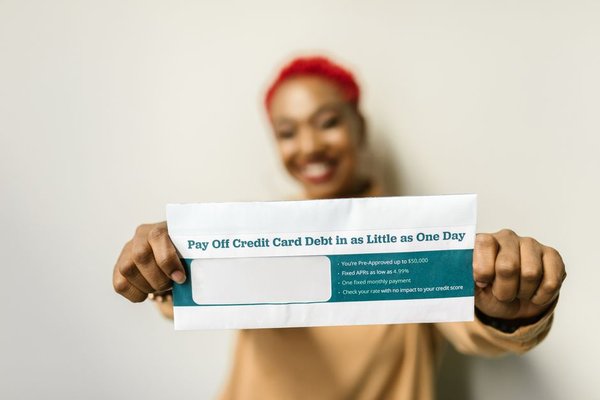

There is no single credit score that guarantees approval for a personal loan. Each lender sets its own cutoff and weighs your credit alongside income, existing debt, recent payment history, and the amount you want to borrow. Still, your score matters because it often determines which lenders will consider you and how expensive the loan may be.
For many unsecured personal loans, a score in the low 600s is a common starting point rather than a universal rule. Some lenders consider applicants below 600, while others prefer good credit of 670 or higher. The most competitive rates are usually reserved for applicants with stronger scores, stable income, and manageable debt.
What Credit Score Do You Need for a Personal Loan?
Borrowers with scores from 580 to 669 may find options, but they should expect fewer choices and higher costs. Scores from 670 to 739 generally open access to more mainstream lenders. Applicants at 740 and above are more likely to qualify for favorable pricing, although approval still depends on the rest of the application.
These credit tiers are useful for planning, but they are not approval bands. A lender may decline someone with a 720 score because their monthly debt payments are too high, while approving someone with a 640 score who has reliable income, a modest loan request, and a clean recent payment record.
Below 580: Limited Options
A score below 580 falls within the poor FICO range. Unsecured loans may be difficult to obtain, and offers can include high annual percentage rates, origination fees, or small borrowing limits. Compare the total repayment amount carefully and avoid products that depend on repeated refinancing.
580 to 669: Fair Credit
Fair-credit borrowers can qualify with some banks, credit unions, and online lenders, but the advertised lowest rate is unlikely to apply. A smaller request, lower debt-to-income ratio, or qualified co-borrower may strengthen the application. This is why the phrase minimum credit score for loans can be misleading: meeting a minimum only allows evaluation; it does not guarantee approval.
670 to 739: Good Credit
FICO classifies 670 to 739 as good credit. Applicants in this range generally have access to more lenders and may receive better rates than fair-credit borrowers. Recent late payments, high card balances, unstable income, or several new accounts can still weaken an otherwise solid application.
740 and Above: Strongest Position
A score of 740 or higher can improve your chances of receiving competitive terms. Even then, the lowest advertised APR may require a particular loan amount, repayment term, income level, or autopay arrangement. Strong credit helps, but lenders still test whether the proposed payment fits your budget.
Why Your Score Is Only the First Filter
When lenders review a FICO score for a personal loan, they are estimating repayment risk. The number summarizes information in your credit reports, but lenders often examine the underlying details too. A recent collection, repeated late payments, high revolving balances, or a thin credit file may matter even when two applicants have the same score.
Income and debt are equally important. Lenders may calculate debt-to-income ratio by dividing required monthly debt payments by gross monthly income. They can also verify employment, housing costs, identity, bank information, and the stated purpose of the loan.
Loan size changes the decision as well. Asking for $8,000 can be easier to justify than asking for $30,000 on the same income. A lender may approve a smaller amount, charge a higher rate, or offer a different term instead of accepting the original request.
A Realistic Approval Example
Consider Maya, who has a 648 credit score, earns $4,800 per month before taxes, and pays $900 toward existing debts. She wants $12,000 to consolidate credit-card balances. Her score is not excellent, but her recent payments are on time and the new loan would replace higher monthly obligations rather than add entirely new debt.
One lender may decline her because its cutoff is 660. Another may prequalify her at a higher APR. A credit union may approve a smaller amount after reviewing her income and membership history. Comparing offers through soft-pull prequalification can reveal which lender’s criteria fit her profile before she submits a formal application.
How Your Score Changes the Cost
A lower score usually means a lender charges more to compensate for perceived risk. That can affect the APR, origination fee, approved amount, and repayment term. Compare APR rather than interest rate alone because APR reflects interest plus certain finance charges.
Review the amount deposited into your account too, since an origination fee may be deducted from the proceeds. A longer term can reduce the monthly payment while increasing total interest. Useful next reads include personal loan APR and fees, a debt-to-income ratio calculator, and a personal loan eligibility checklist.
How to Improve Your Chances Before Applying
Check your credit reports for inaccurate balances, unfamiliar accounts, or wrongly reported late payments. Then reduce credit-card balances where possible, avoid opening several new accounts, and keep every bill current. If the need is not urgent, a few months of lower balances and clean payment history may improve available terms.
Use prequalification when a lender clearly states that it relies on a soft inquiry. A soft inquiry does not affect your score, while a formal application commonly triggers a hard inquiry. Confirm the process before providing final consent.
Applicants with weaker credit can also consider a smaller loan, a secured loan, or a qualified co-borrower. Each creates trade-offs. Collateral can be lost after default, and a co-borrower becomes legally responsible for the debt.
Frequently Asked Questions
Can I get a personal loan with a 600 credit score?
Possibly. Some lenders consider applicants around 600, but approval and pricing depend on income, debt, recent credit history, loan size, and lender policy. Expect fewer choices and compare the full APR and fees.
Is 700 a good credit score for a personal loan?
A 700 score falls within the good FICO range and may qualify you with many mainstream lenders. It does not guarantee the lowest rate because lenders also evaluate affordability and payment history.
Does prequalifying hurt my credit?
Prequalification often uses a soft inquiry, which does not affect your score. A completed application may use a hard inquiry and can have a small, temporary effect. Check the lender’s disclosure first.
Can I qualify without a credit score?
Some lenders evaluate applicants with limited or no traditional credit history by considering income, employment, banking activity, or other information. Options are narrower, so review fees and affordability carefully.
What Lenders Actually Want
Personal loan credit score requirements are not a simple pass-or-fail test. Lenders want evidence that you are likely to repay the specific loan requested. A stronger score helps, but affordable debt levels, stable income, recent payment behavior, and a sensible loan amount can be just as decisive.
Check your reports, estimate the payment, prequalify with reputable lenders, and compare APR, fees, term, and total repayment. The goal is not merely to get approved. It is to choose a loan that solves the immediate need without creating a larger financial problem.